


Emotional Regulation Secret Yogis Knew Thousands of Years Ago
If you’ve ever tried to focus on one task and somehow ended up:
• answering emails
• checking your phone
• reheating your coffee
• googling “symptoms of burnout”
• remembering you forgot to sign the school permission slip
…you may have wondered:
Do I have ADHD?
Maybe.
Or maybe you just have what the yogis have been talking about for thousands of years.
They called it the monkey mind.
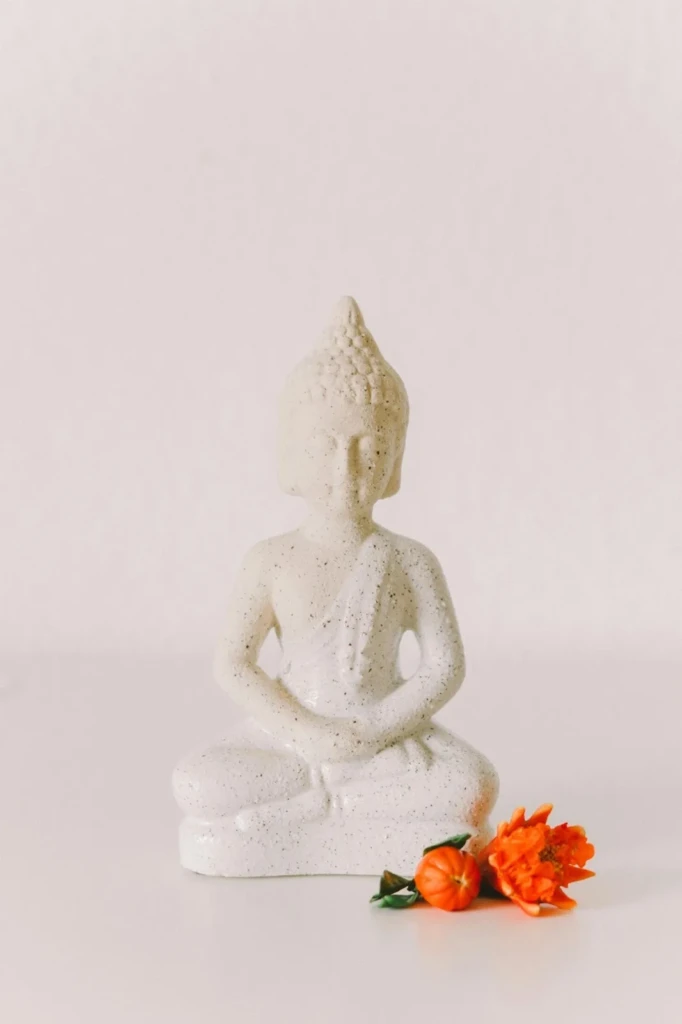
The Monkey Mind (According to Yogis)
Long before modern psychology created diagnostic manuals like the DSM, the yogis were observing something about human beings.
The mind is busy.
Very busy.
In yogic philosophy, the mind naturally produces thousands of thoughts every minute. Not organized thoughts either. We’re talking scattered, jumping-from-topic-to-topic thoughts.
Sound familiar?
If the ancient yogis were alive today watching people juggle Slack messages, emails, kids, deadlines, and social media, they might say:
“Ah yes… the monkey mind has clearly discovered Wi-Fi.”

ADHD, Focus, and the Ancient Yoga Perspective
Today we talk about ADHD, focus challenges, and emotional regulation as modern issues.
But the yogis believed that a distracted mind is simply the default human condition.
In the ancient text Yoga Sutras of Patanjali, the entire goal of yoga is described in one simple idea:
The goal of yoga is to calm the fluctuations of the mind.
In other words:
It teaches the monkey to sit down.
Not forever.
Just long enough for you to finish the meeting, answer the email, or remember what you walked into the kitchen for.
The Yogis’ Tool for Focus and Emotional Regulation
So how did they train the monkey mind?
Meditation.
Meditation is essentially mental training. It helps you develop the ability to direct your attention instead of letting your thoughts run the show.
Your mind can be:
• your greatest ally
• or the loudest critic in your life
The difference is whether you know how to guide it.
And according to the yogis, the steering wheel is something you carry with you all day.
Your breath.
What Your Breath Has to Do With Your Emotions
Now let’s talk about emotions.
You know the moment.
One slightly passive-aggressive email.
A child melting down before school.
A meeting that could have been an email.
Suddenly your emotions are doing their own interpretive dance.
The yogis noticed something fascinating about emotional regulation:
The first thing that changes when your emotions change is your breathing pattern.
When you’re anxious → breathing becomes fast and shallow.
When you’re angry → breathing becomes sharp and forceful.
When you’re calm → breathing becomes slow and steady.
So the yogis asked a brilliant question:
If emotions change the breath…
What happens if you change the breath first?
Breathwork and the Nervous System
Modern neuroscience now confirms what the yogis observed thousands of years ago.
Your breathing directly influences your nervous system regulation.
When your breathing slows down and becomes steady, it signals to the body that it is safe to relax. Your heart rate lowers, your nervous system settles, and your mind becomes clearer.
This is why breathing techniques are now widely used to support emotional regulation, stress reduction, and focus.
In other words:
The breath is like a remote control for the nervous system.
Wait… What About Therapy?
Now before anyone throws out their therapist:
Therapy can be incredibly valuable.
As a psychotherapist with over 20 years of clinical experience, I’ve seen how powerful therapeutic work can be for processing experiences, building insight, and developing emotional resilience.
But I’ve also noticed something interesting.
Two of the most common struggles people bring into therapy are:
• racing thoughts
• overwhelming emotions
And one of the fastest ways to influence both…
is learning how to regulate the breath.
The challenge is that many health professionals tell clients to “just breathe” without ever learning how breathing actually works.
Which is a bit like telling someone to “just play piano” without showing them where the keys are.
Bringing Ancient Breath Wisdom Into Modern Life
At People of the Prana, we take inspiration from the original breath teachers: the yogis.
They understood that breathing is something we do every moment of our lives, so learning how to work with the breath gives us a powerful tool for managing stress, improving focus, and regulating emotions.
Our programs are designed to teach breathing in a way that fits into modern life.
Because most people today are juggling:
• demanding careers
• family life
• endless notifications
• and a mind that sometimes behaves like a caffeinated monkey.
Our approach focuses on simple breathing practices that take just a few minutes but can profoundly affect your nervous system.
Programs like Beat + Breath, Begin with Breath, and the Nervous System First Aid Kit help people understand the science of breathing and how it can support stress resilience, emotional balance, and mental clarity.
The Good News About the Monkey Mind
The goal isn’t to eliminate the monkey mind.
That monkey is probably staying.
The goal is simply to teach it how to settle down once in a while.
And the easiest way to do that is with the breath.
Because even in the middle of busy workdays, family schedules, and the beautiful chaos of modern life…
your breath is always there.
Waiting to bring you back to calm.
One breath at a time.